Explore the Internet of Things
Discover how IoT is transforming industries and shaping the future of connected devices
IoT Fundamentals
What is IoT?
The Internet of Things (IoT) describes the network of physical objects—'things'—that are embedded with sensors, software, and other technologies for the purpose of connecting and exchanging data with other devices and systems over the internet.
Key Features
- Artificial Intelligence
- Connectivity
- Sensors
- Active Engagement
- Small Device Use
Architecture Components
Devices
Sensors, actuators, and smart objects
Connectivity
Communication protocols and networks
Data Processing
Cloud computing and edge processing
Applications
User interfaces and business logic
Industry Applications
Transforming Every Sector
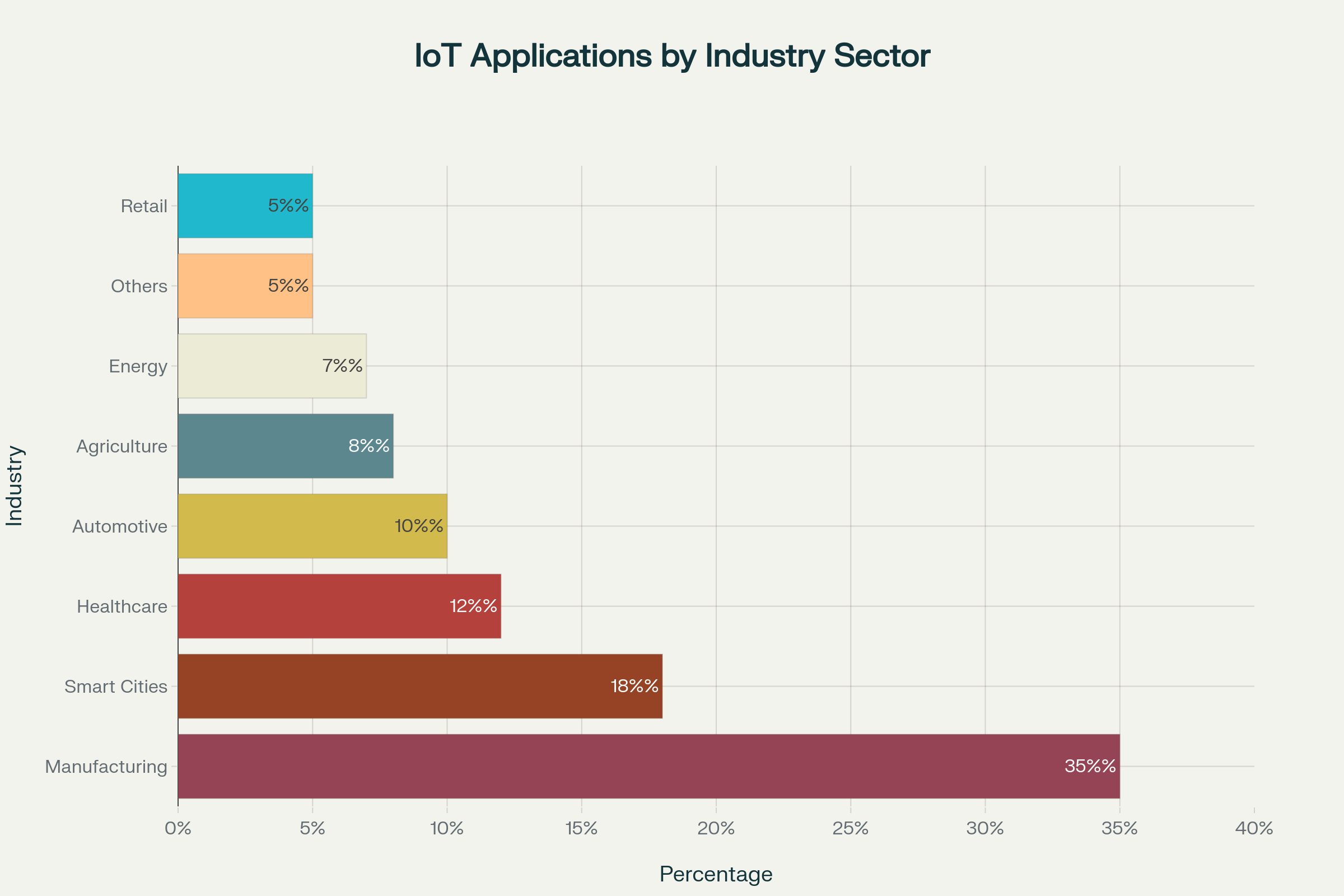
IoT is not just a single technology but a versatile framework that finds applications across numerous industries. From enhancing manufacturing efficiency to creating smarter cities and personalizing healthcare, the impact is widespread. The chart illustrates the market share of key IoT application areas.
Manufacturing & Industry 4.0
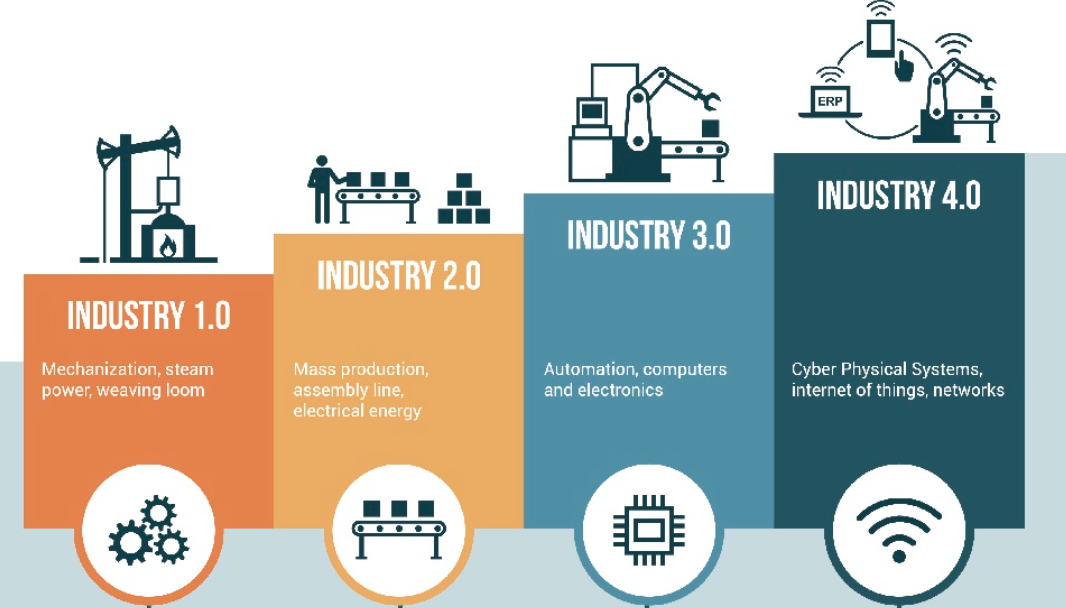
IoT enables smart factories with connected machines, predictive maintenance, and automated quality control
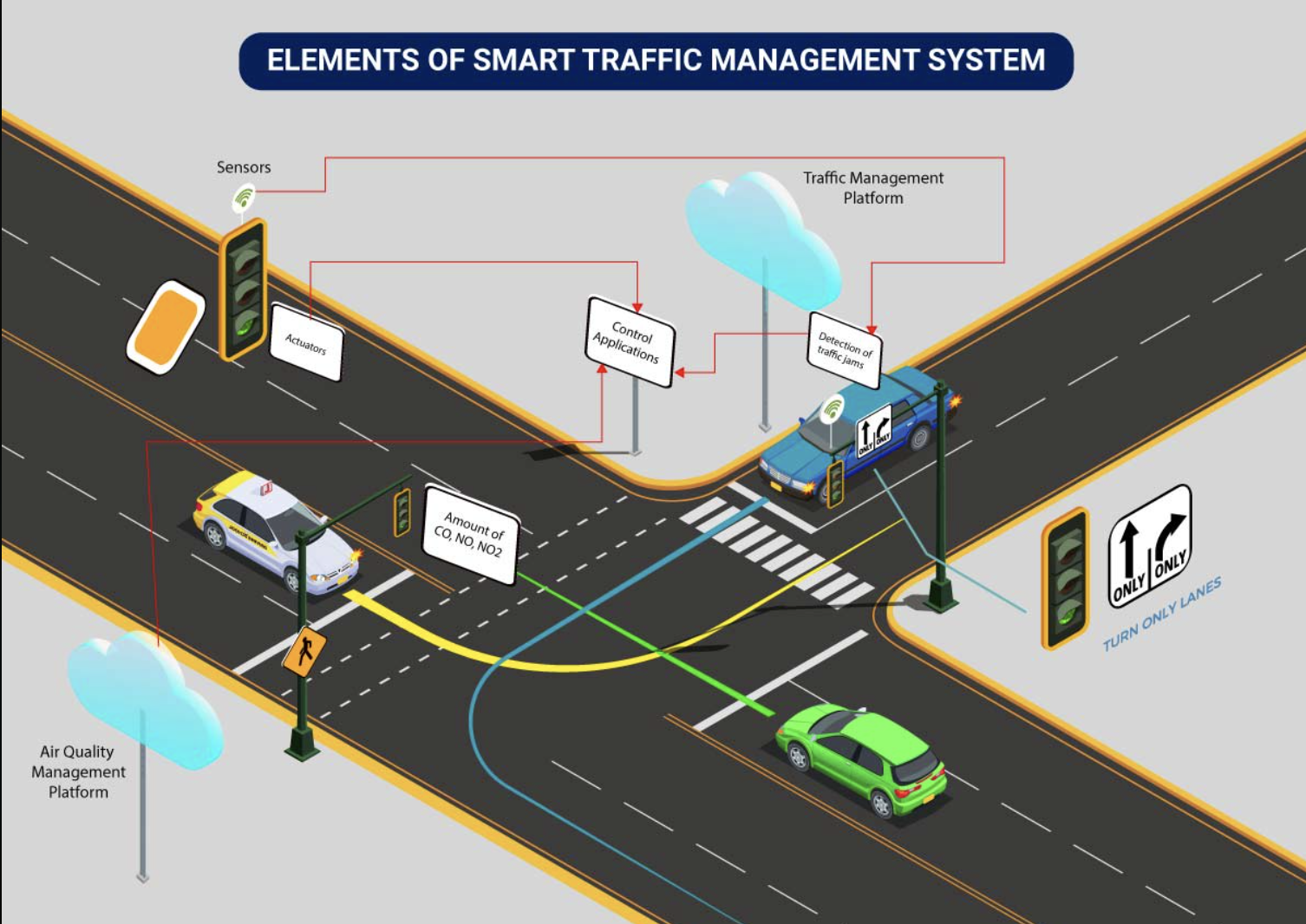
Smart Cities
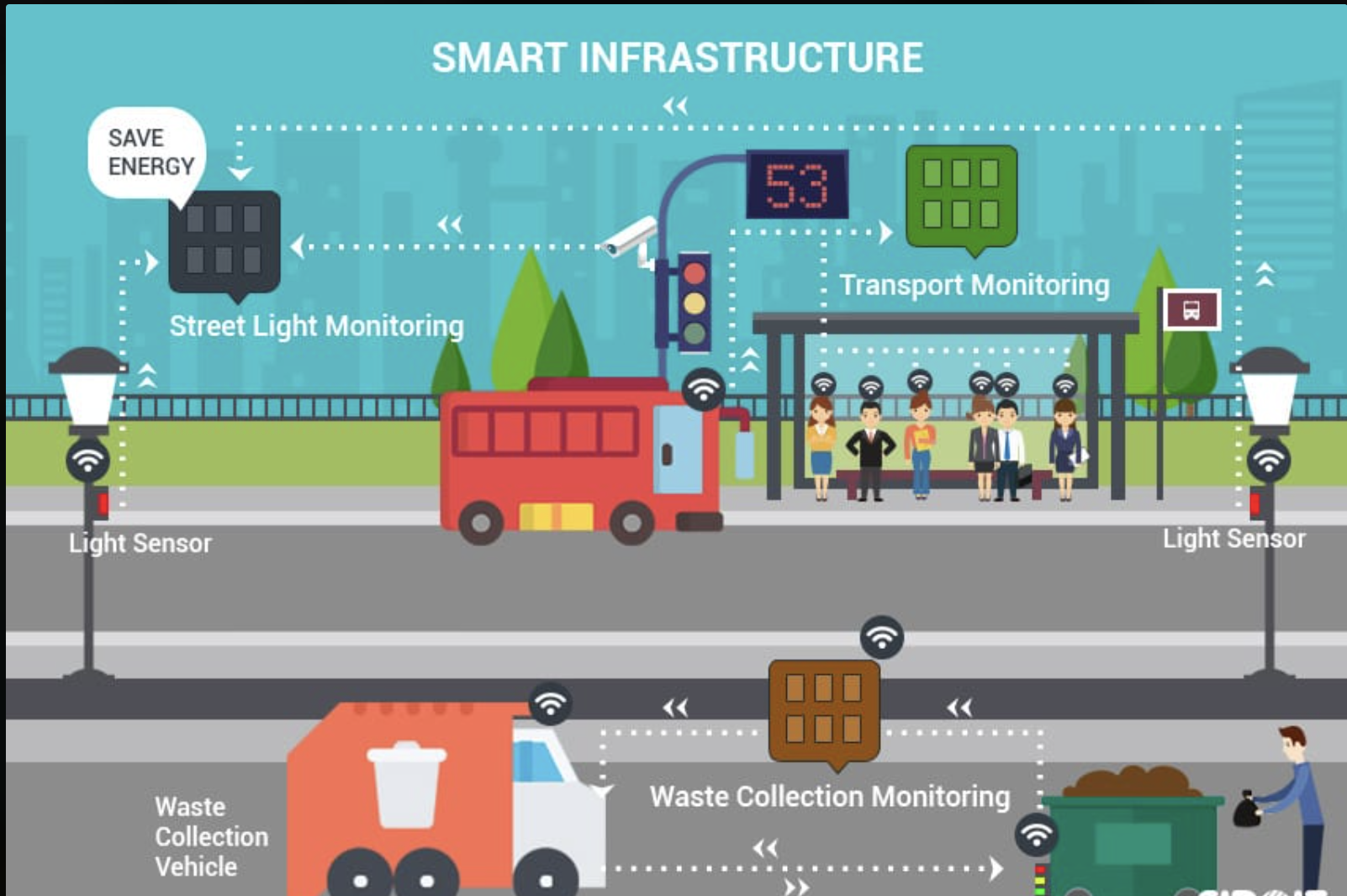
IoT transforms urban infrastructure through connected traffic systems, smart lighting, and environmental monitoring
Healthcare IoT
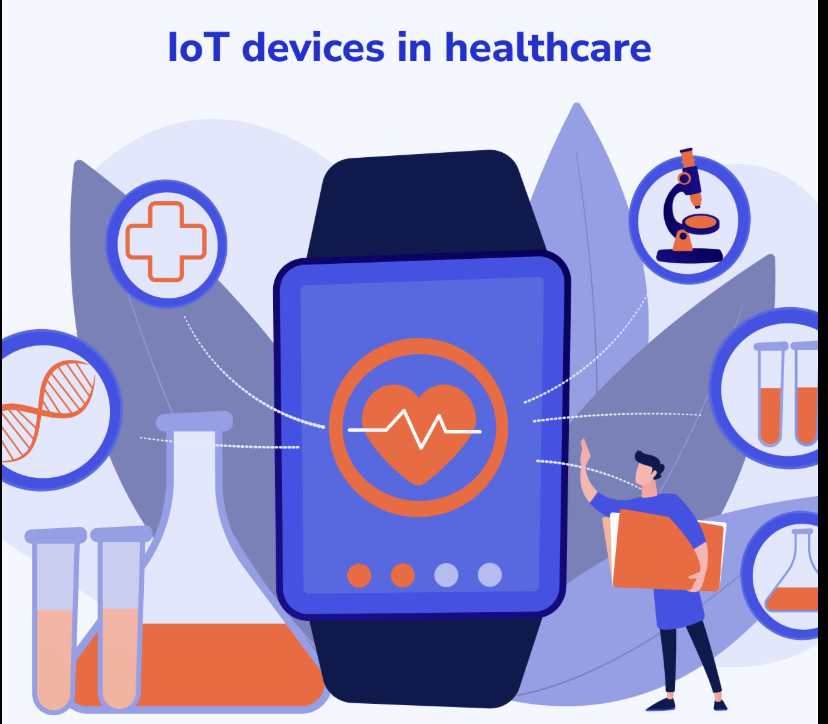
IoT enables remote patient monitoring, smart medical devices, and personalized healthcare
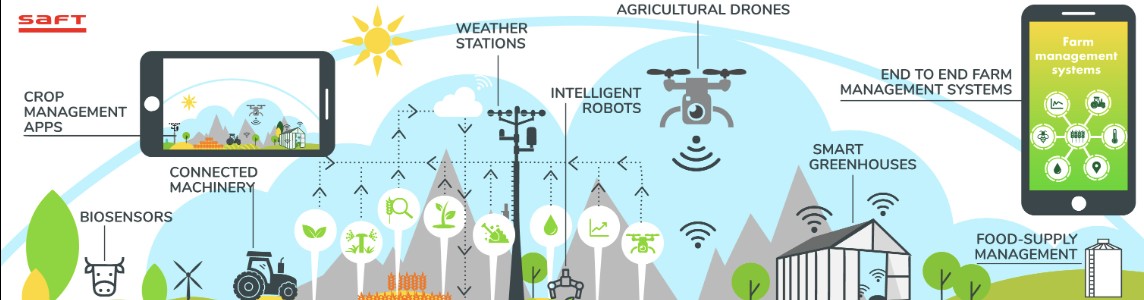
Precision Agriculture
IoT optimizes farming through soil monitoring, automated irrigation, and crop health tracking
Connected Vehicles
IoT enables vehicle-to-vehicle communication, autonomous driving, and enhanced safety features
Agentic IoT: The Rise of Autonomous Systems
From kilobyte-class MCUs to cloud-scale digital twins, see how AI agents are reshaping the IoT stack.
Why 'Reactive IoT' Hits a Wall
Most current IoT deployments are 'dumb' telemetry pipes. They collect data, upload it, and wait for rules, leading to critical delays and operational blind spots. This latency is a major source of industrial failure.
The solution is to push autonomy down the stack, enabling networks to sense, plan, and act in real time, turning reactive devices into proactive, self-governing systems.
The Root of Industrial Outages
A 2024 IoT Analytics survey found the majority of industrial outages stem from rule-engine blind spots or cloud latency.
The Agentic IoT Architecture Stack
Agentic IoT distributes intelligence across a four-tier architecture, enabling decisions to be made at the most effective point, from the device itself to the cloud.
Device/MCU Layer
TinyML models in KB of memory run on µW budgets. Enables <1ms latency for real-time control of motors and valves.
Edge/Fog Gateways
Powerful NPUs host vector stores and planning graphs. Local agents trigger rollbacks in <100ms.
Cloud/Control Plane
Handles heavy model training, fleet orchestration, and digital twins. Enforces global policy and compliance.
Horizontal Agent Layer
Perception, planning, execution, and governance agents span all tiers, coordinated via protocols like MCP.
Proving It Beats Rule Engines
The shift to Agentic IoT delivers dramatic, measurable improvements in efficiency, reliability, and safety compared to traditional, reactive systems.
Essential Design Patterns
The Local Sense-Plan-Act Loop
This core pattern enables ultra-low latency reflexes by keeping the entire decision-making cycle on the device or edge gateway. The cloud is only used for escalating rare or complex events.
Key Agentic Patterns
✨ Generate Agentic IoT Use Cases ✨
Enter an industry or a general idea to see how Agentic IoT could transform it into an autonomous system.
Risks & Anti-Patterns to Avoid
Latency Hell
'Chatty' agents relying on cloud round-trips for every decision. Solve with on-device vector recall.
Model Drift
Stale embeddings on MCUs. Solve with scheduled, few-shot re-quantization.
Security Theater
Default credentials still ship on 51% of devices. Fines start at €15M under the EU CRA.
Agent Sprawl
Orphaned micro-agents with no registry. Enforce kill-switch policies via MCP.
The 3-to-5-Year Horizon
Key regulations and technology milestones will make agentic architectures mandatory and mainstream by 2027.
A Closer Look: Smart Traffic Systems
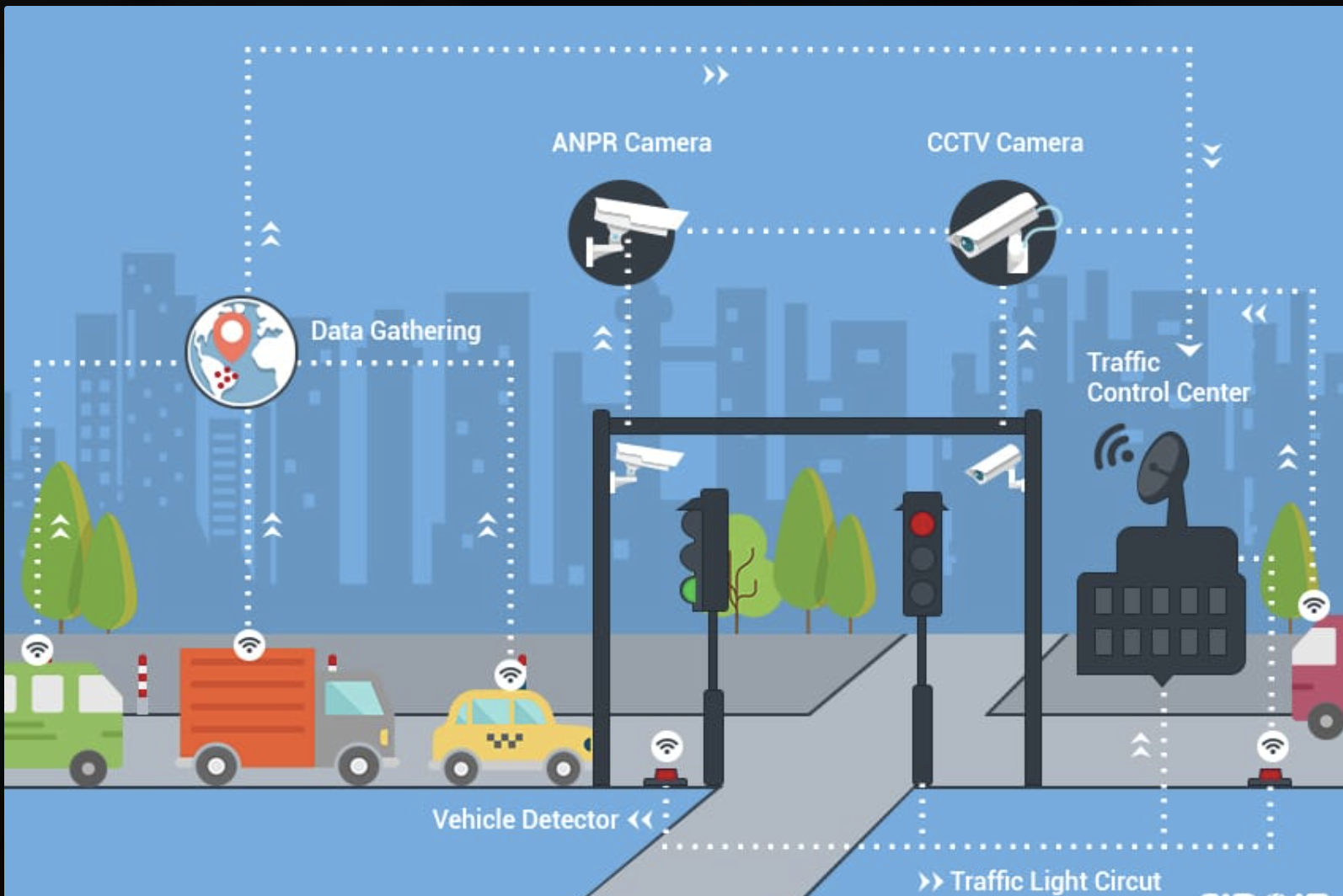
Integrated Traffic Control
Modern traffic management leverages a network of sensors and cameras to gather real-time data. Vehicle detectors, ANPR, and CCTV cameras feed information to a central Traffic Control Center.
This data is analyzed to optimize traffic light circuits, reducing congestion and improving flow. The system can automatically adjust signal timings based on current conditions, leading to safer and more efficient urban transportation.
Connectivity Technologies
5G
Wide (5-50 km)4G/LTE
Wide (5-50 km)Wi-Fi
Short (50-100m)Bluetooth
Short (10-100m)Zigbee
Short (10-100m)LoRaWAN
Long (2-15 km)NB-IoT
Wide (1-10 km)Cat-M1
Wide (1-10 km)Market Trends
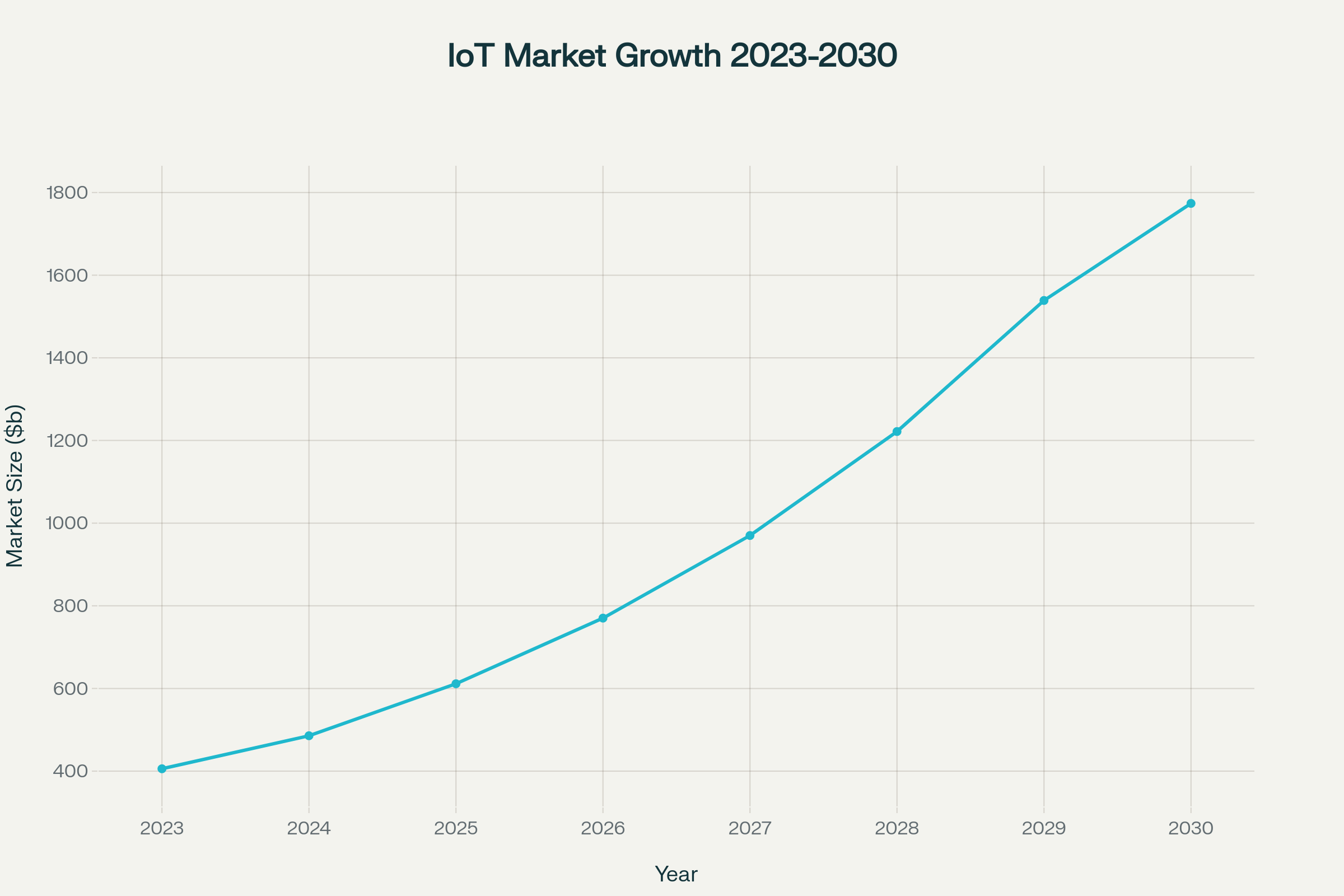
Market Growth
The global IoT market is experiencing exponential growth, projected to surpass $1.7 trillion by 2030. This expansion is driven by advancements in connectivity, sensor technology, and AI.
2024 Trends
- AI Integration
- Edge Computing
- 5G Expansion
- Enhanced Security
- Passive IoT
2025 Predictions
- 75 billion connected devices
- AI in 70% of IoT systems
- Video-based data shift
- BVLOS drone operations
Security & Challenges
Main Challenges
- Weak default passwords
- Lack of encryption
- Insufficient update mechanisms
- Device visibility issues
Attack Statistics
Best Practices
- Change default passwords
- Implement encryption
- Regular updates
- Network segmentation
- Device monitoring